
The Complete Guide
How to Choose the Right Square Air Conditioner Cover | Square AC Cover | Air Conditioning Cover
Why Your Outdoor Furniture Needs a Cover
Australia's climate presents unique challenges for anything left outdoors, and your air conditioning unit is no exception. From the intense UV radiation that can reach index levels of 10+ during summer months to sudden afternoon storms that seem to appear from nowhere, outdoor equipment faces a constant battle against the elements.
Your outdoor AC unit represents a significant investment, often costing thousands of dollars to purchase and install. Without proper protection, exposure to rain, hail, dust, and debris can lead to premature wear, corrosion, and reduced efficiency. The best square air conditioner cover acts as a shield, extending the lifespan of your unit and maintaining its appearance year after year.
In coastal areas from the Gold Coast to Perth's western suburbs, salt air presents an additional threat, accelerating corrosion on metal components. Meanwhile, those living in bushfire-prone regions must contend with ash and debris that can clog filters and damage sensitive components. A quality weatherproof air conditioner cover provides essential protection against all these threats.
Beyond protection from weather, covers also serve a practical aesthetic purpose. Nobody wants an unsightly, weathered AC unit dominating their outdoor entertaining area. The best outdoor AC unit cover keeps your equipment looking new whilst blending seamlessly into your garden or patio space.
What Makes a Quality Outdoor Furniture Cover
Not all covers are created equal, and when it comes to protecting valuable outdoor equipment, understanding what separates a premium cover from a cheap alternative is essential knowledge for any homeowner.
Heavy-Duty Materials Built for Australian Conditions
The foundation of any great outdoor cover is its material. The best heavy duty AC cover will feature 600D polyester canvas or similar high-denier fabric that resists tearing, punctures, and abrasion. This measurement — the 'D' standing for denier — indicates the thickness of the individual fibres used in the weave. Higher numbers mean more robust, longer-lasting protection.
Look for covers with waterproof backing rather than simply water-resistant treatments. While water-resistant fabrics may repel light showers, they'll eventually allow moisture through during sustained rainfall. A truly waterproof air conditioner cover features a sealed backing that creates an impenetrable barrier against water ingress.
UV resistance is equally crucial in Australia. The best UV resistant AC cover incorporates UV stabilisers in the fabric that prevent degradation from sun exposure. Without this protection, covers can become brittle, fade, and crack within a single season of harsh Australian sun.
Ventilation and Moisture Management
One of the most overlooked aspects of outdoor covers is ventilation. Whilst keeping water out is important, trapping moisture inside can be equally damaging, leading to mould growth, musty odours, and condensation damage.
The best all weather AC cover incorporates structured air vents that allow airflow whilst preventing rain entry. These vents are typically positioned on the sides and feature baffled designs that permit air circulation whilst blocking wind-driven rain.
Proper ventilation also prevents billowing during windy conditions. Without airflow, covers can balloon and strain against their fastenings, potentially tearing or breaking free entirely. Quality engineered vents equalise pressure and help the cover maintain its shape during gusty conditions.
Secure Fastening Systems
Australia is renowned for its sudden weather changes — calm mornings can transform into howling afternoon storms with little warning. A cover that blows away at the first gust offers no protection at all.
The best square AC cover with straps features multiple securing mechanisms working together. Elastic draw cords around the base provide consistent tension that accommodates slight variations in unit size whilst maintaining a snug fit. Heavy-duty plastic clips add secondary attachment points that anchor the cover firmly to your unit.
Look for covers with handles on multiple sides. These serve dual purposes: making the cover easier to remove and replace, and providing attachment points for additional securing if needed during severe weather events.
How to Measure Your Outdoor Furniture
Accurate measurement is the key to finding a cover that fits perfectly. An oversized cover looks untidy and can catch wind more easily, while an undersized cover leaves portions of your unit exposed to the elements.
For square air conditioning units, you'll need to measure both the width and depth. Using a tape measure, determine the widest point of your unit from side to side — this is your width. Then measure from front to back at the deepest point for the depth. Don't forget to account for any protruding pipes, cables, or mounting brackets that extend beyond the main body of the unit.
Height is equally important. Measure from the ground to the highest point of your AC unit. If you have a concrete pad or mounting platform beneath the unit, decide whether you want the cover to reach the ground or simply cover the unit itself.
Always add approximately 2-5cm to your measurements to ensure adequate coverage. This small allowance ensures the cover fits comfortably without stretching whilst still maintaining a neat appearance.
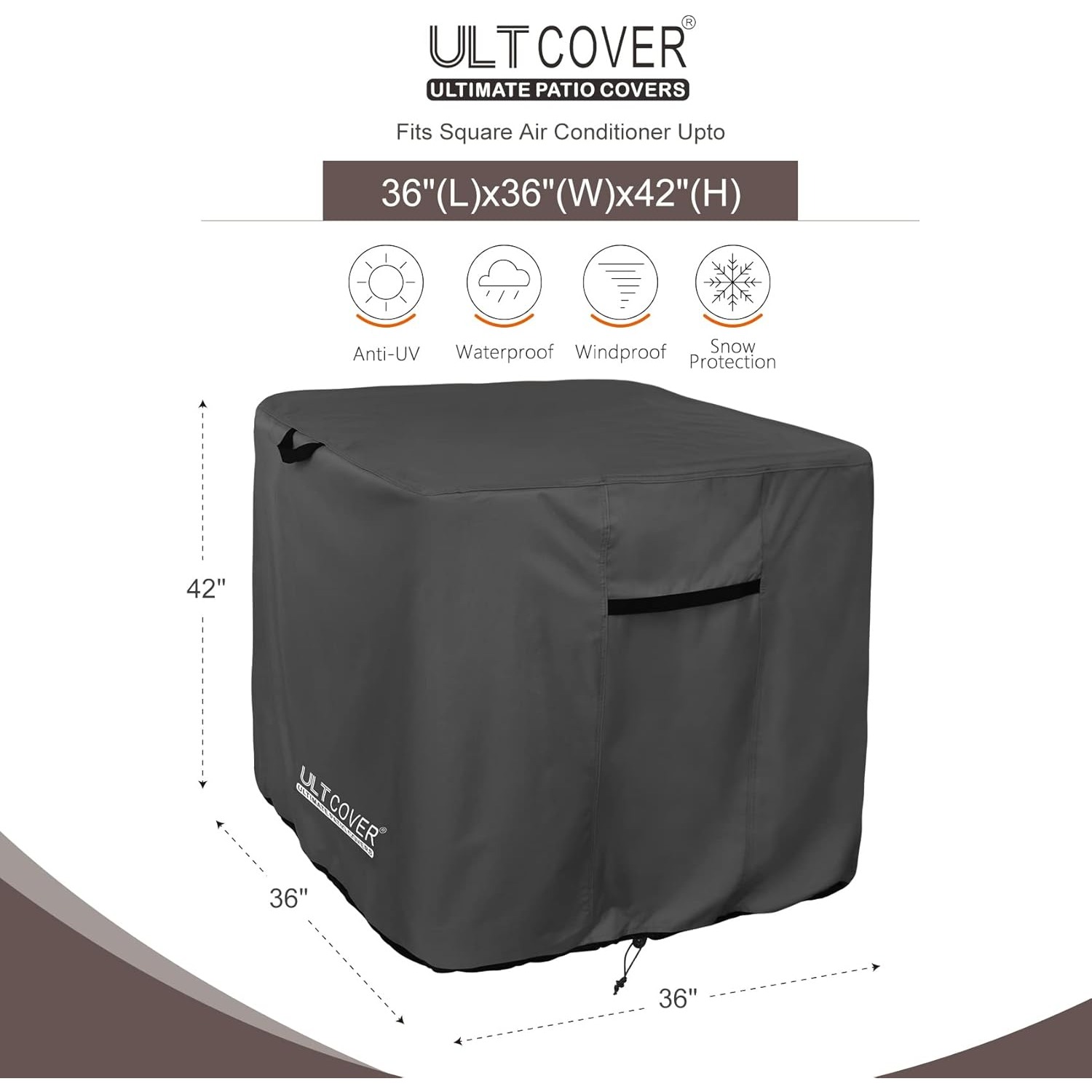
Write down your measurements and keep them handy when shopping. Our square air conditioner cover fits units up to 91cm x 91cm (36" x 36"), which accommodates most standard residential outdoor units.
Fixed Size vs Custom Made
When shopping for the best outdoor air conditioning unit cover, you'll encounter both fixed-size options and custom-made alternatives. Understanding the advantages of each helps you make the right choice for your situation.
Fixed-size covers like our square air conditioner cover offer excellent value and immediate availability. These covers are manufactured to fit the most common unit dimensions, with elastic draw cords and adjustable fastenings that accommodate variations within the size range. For most standard residential AC units, a quality fixed-size cover provides perfect protection at a fraction of the cost of custom options.
Custom-made covers become worthwhile for unusually sized units, commercial equipment, or when you require specific features not available in standard products. These are typically made to order with longer lead times and higher price points.
For the majority of Australian homeowners, a premium fixed-size cover represents the optimal balance of protection, convenience, and value. The adjustable securing systems accommodate slight size variations whilst the heavy-duty materials provide professional-grade protection.
How to Care for Your Cover
Proper maintenance extends the lifespan of your cover significantly, ensuring you get maximum value from your purchase whilst maintaining optimal protection for your AC unit.
Regular cleaning is essential. Australian conditions mean dust, pollen, bird droppings, and leaf litter accumulate quickly on outdoor covers. Remove your cover monthly and shake off loose debris. For more thorough cleaning, lay the cover flat and hose it down with fresh water. A soft-bristled brush can help remove stubborn dirt without damaging the waterproof coating.
For stains, use a mild soap solution — dishwashing liquid diluted in water works well. Apply with a soft cloth or sponge, working gently to avoid abrading the fabric surface. Rinse thoroughly to remove all soap residue, as leftover detergent can attract dirt and potentially affect the waterproof properties.
Always allow your cover to dry completely before replacing it or storing it. Packing away a damp cover encourages mould and mildew growth, creating unpleasant odours and potentially damaging the fabric. In Australian conditions, air drying typically takes just a few hours on a sunny day.
Inspect your cover regularly for signs of wear. Pay particular attention to stitched seams, elastic cords, and fastening clips. Early detection of minor damage allows for repairs before small issues become major problems.
During extended periods when your AC unit isn't in use — perhaps during cooler months — ensure the cover is fitted correctly and all fastenings are secured. Check periodically that the cover hasn't shifted or become damaged by wildlife or fallen branches.
Common Mistakes to Avoid
Even the best garden air conditioner cover won't perform optimally if installed incorrectly. Understanding common mistakes helps you get the most from your investment.
Choosing the wrong size is perhaps the most frequent error. A cover that's too small leaves portions of your unit exposed, whilst an excessively large cover catches wind and looks untidy. Always measure carefully and choose appropriately.
Ignoring ventilation leads to moisture problems. Some homeowners make the mistake of sealing their cover completely, thinking this offers maximum protection. In reality, trapped moisture causes more damage than it prevents. Ensure your cover's air vents remain unobstructed.
Failing to secure properly results in covers blowing away during storms. Use all provided fastening systems — elastic cords and clips work together to maintain security. Check fastenings after severe weather events.
Covering a hot unit can trap heat and cause damage to both the cover and the AC unit. Always allow your air conditioner to cool completely before fitting the cover. Running your unit with the cover partially or fully in place is dangerous and should never be attempted.
Using harsh chemicals for cleaning degrades the waterproof coating and UV-resistant treatments. Stick to mild soap and fresh water for cleaning. Never use bleach, solvents, or pressure washers.
Storing improperly during off-seasons accelerates deterioration. If you remove your cover during certain periods, store it in a cool, dry location away from direct sunlight. Fold loosely rather than cramming into tight spaces to prevent creasing and cracking.
By avoiding these common pitfalls, your best patio AC unit cover will provide years of reliable service, keeping your outdoor air conditioning unit protected through every Australian season.