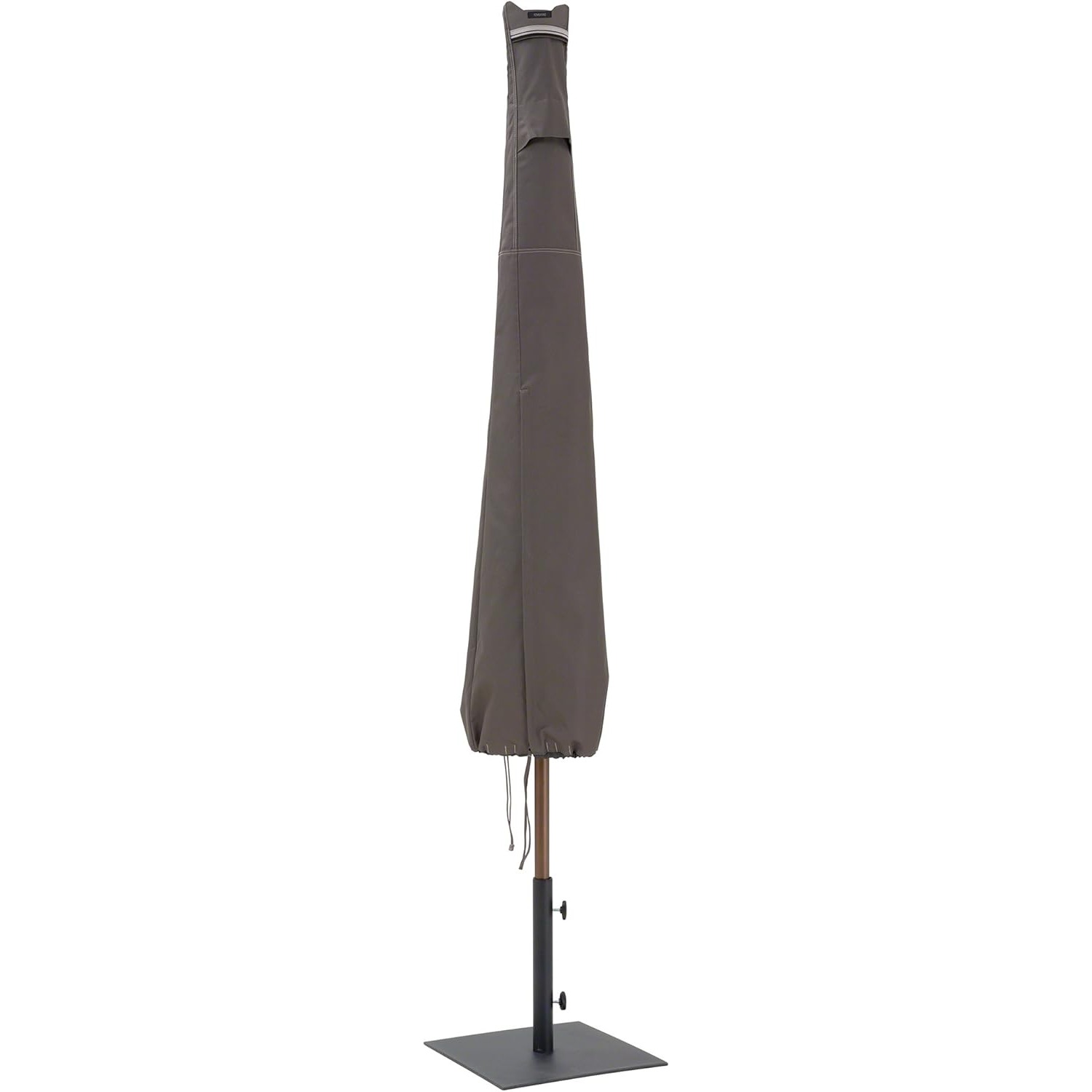

The Complete Guide
How to Choose the Right Patio Umbrella Cover | Outdoor Umbrella Covers | Garden Umbrella Cover
Why Your Patio Umbrella Needs a Cover
Australian outdoor living is second to none, but our beautiful climate comes with challenges that can quickly destroy unprotected outdoor furniture. Your patio umbrella represents a significant investment in your outdoor entertaining space, and without proper protection, it's vulnerable to the harsh realities of Australian weather conditions.
The best patio umbrella cover acts as a shield against multiple threats. Australia consistently records some of the highest UV index readings in the world, with summer values regularly exceeding 10 — the 'extreme' category. This intense ultraviolet radiation causes umbrella fabric to fade, become brittle, and deteriorate rapidly. Without a UV resistant umbrella cover, you might find yourself replacing your umbrella every couple of years rather than enjoying it for a decade or more.
Beyond UV damage, Australian weather throws everything at outdoor furniture. Sudden summer storms can drench your umbrella with rain, leading to mould and mildew growth in the fabric. Coastal areas add salt air corrosion to the mix, while inland regions contend with dust storms and debris. A quality waterproof umbrella cover creates a protective barrier against all these elements, keeping your umbrella clean, dry, and ready for your next barbecue or outdoor gathering.
Birds and possums also pose threats to uncovered umbrellas, leaving droppings that can stain fabric permanently. Insects may nest in the folds, and spider webs accumulate rapidly. The best outdoor umbrella protector keeps wildlife at bay while preserving your umbrella's appearance and hygiene.
What Makes a Quality Patio Umbrella Cover
Not all umbrella covers are created equal. When shopping for the best garden umbrella cover, understanding the key features that separate premium protection from flimsy alternatives will help you make an informed decision.
Heavy Duty Materials and Construction
The foundation of any best heavy duty patio umbrella cover is its fabric construction. Look for covers made from woven polyester rather than thin, non-woven materials that tear easily. Premium covers feature multiple layers: a tough outer shell that resists abrasion and punctures, a UV-stabilised coating that prevents degradation from sunlight, and a water-resistant laminated backing that keeps moisture out.
Stitching quality matters enormously. Double-stitched seams with reinforced stress points will outlast single-stitched alternatives by years. Pay attention to the thread used — UV-resistant thread won't break down and unravel after a few seasons of sun exposure. The best weatherproof umbrella cover combines all these elements into a cohesive protective system.
Convenient Access Features
The best patio umbrella cover with zipper access makes your life significantly easier. Nobody wants to wrestle with a cover every time they want to use their umbrella. A full-length zipper allows you to quickly slip the cover on and off, encouraging regular use rather than leaving the cover in the shed because it's too much hassle.
Other convenience features to look for include reinforced padded handles for easy removal, air vents that prevent condensation buildup and allow the cover to breathe, and elastic hem cords that create a snug, secure fit. The best outdoor umbrella cover with drawstring or elastic systems adjusts to accommodate slight size variations and ensures the cover stays put during windy conditions.
Weather Resistance Ratings
When evaluating the best all weather umbrella cover, examine its specific weather resistance capabilities. Water resistance is measured differently across products, so look for covers explicitly rated as waterproof or water-resistant with laminated backing. This is particularly important for the best large patio umbrella cover, as larger surface areas collect more water.
UV resistance should be clearly stated — quality covers feature UV-stabilised coatings that maintain their integrity through multiple Australian summers. For coastal residents, consider covers made from materials resistant to salt air corrosion. The best garden umbrella dust cover will also feature tight weaves that prevent fine particles from penetrating to the umbrella beneath.
How to Measure Your Patio Umbrella
Achieving the perfect fit starts with accurate measurements. An incorrectly sized cover either won't protect your umbrella properly or will be so loose it flaps in the wind and potentially blows away.
For the best round patio umbrella cover fit, measure your umbrella when it's closed and furled tightly around the pole. You'll need two measurements: the circumference at the widest point (usually near the top where the canopy bunches) and the total length from the top finial to the bottom of the closed canopy.
The best market umbrella cover typically fits umbrellas up to 11 feet in diameter when open, which translates to specific closed dimensions. Always check the manufacturer's size guide against your measurements. If you're between sizes, it's generally better to size up slightly — a cover that's marginally too large can be secured with elastic hems, but one that's too small won't provide adequate coverage.
For cantilever or offset umbrellas, the best outdoor cantilever umbrella cover may have different dimensions due to the unique shape of these designs. Measure the closed canopy dimensions carefully and consider the position of the arm mechanism when selecting a cover style.
Fixed Size vs Custom Made
Most Australian shoppers will find that quality fixed-size covers meet their needs perfectly. The best patio umbrella storage cover in standard sizes fits the majority of market umbrellas available in Australia. These covers are manufactured in common dimensions like 11-foot diameter or 8-foot square, corresponding to popular umbrella sizes sold by major retailers.
The advantages of fixed-size covers include immediate availability, competitive pricing, and proven designs that have been tested across thousands of customers. The best garden parasol cover in a standard size incorporates feedback from real-world use, resulting in practical features like reinforced handles and optimally placed vents.
Custom-made covers become worthwhile for unusual umbrella shapes, oversized commercial umbrellas, or when you require specific features not available in standard options. Custom covers typically cost more and require longer lead times, but deliver a precise fit. Consider custom options if your umbrella has an unusual shape, if you've invested in a high-end designer umbrella, or if standard sizes simply don't accommodate your specific model.
For most homeowners seeking the best patio parasol cover, a quality fixed-size option provides excellent value and protection. Measure your umbrella carefully, compare against available sizes, and choose a cover from a reputable supplier offering warranty protection.
How to Care for Your Cover
Proper maintenance extends the life of your umbrella cover significantly, ensuring it protects your investment for years rather than seasons. The best outdoor umbrella cover deserves care that matches its quality construction.
Regular cleaning prevents dirt buildup that can compromise water resistance over time. Every few weeks, brush off loose debris with a soft-bristled brush. Monthly, wipe the cover down with a damp cloth to remove accumulated dust, pollen, and bird droppings. In coastal areas, more frequent cleaning helps prevent salt buildup that can degrade materials.
For thorough cleaning every few months, remove the cover and lay it flat. Use mild soap — dish soap works well — mixed with lukewarm water. Gently scrub with a soft brush, paying attention to any stained areas. Rinse thoroughly to remove all soap residue, as leftover detergent can attract dirt and potentially affect water resistance.
Always allow your cover to dry completely before storing or reapplying. This is crucial for preventing mould and mildew growth, particularly in humid Queensland or coastal environments. If possible, dry the cover in shade rather than direct sunlight to preserve the UV coating.
When your umbrella isn't in use for extended periods — perhaps during winter months — store the cover in a cool, dry place away from direct sunlight. Fold it loosely rather than compressing it tightly, as this prevents permanent creases that could compromise the waterproof coating along fold lines.
Common Mistakes to Avoid
Even the best heavy duty patio umbrella cover can fail prematurely if used incorrectly. Understanding common mistakes helps you maximise your cover's protective capabilities and lifespan.
Installing on a wet umbrella is perhaps the most frequent error. Covering a damp umbrella traps moisture inside, creating the perfect environment for mould, mildew, and fabric rot. Always ensure your umbrella is completely dry before applying the cover. After rain, open the umbrella briefly to air it out before covering.
Ignoring ventilation leads to condensation problems. Quality covers include air vents for good reason — they allow moisture to escape and air to circulate. Never block these vents, and if your cover develops condensation despite vents, check that the vents aren't obstructed by debris or that the cover isn't pulled too tight.
Choosing the wrong size undermines protection entirely. A cover that's too small leaves portions of your umbrella exposed, defeating the purpose. One that's too large catches wind like a sail, potentially pulling the cover off or even toppling your umbrella. Take accurate measurements and choose accordingly.
Neglecting regular inspections allows small problems to become major failures. Check your cover periodically for signs of wear: fraying seams, UV degradation showing as colour fading or brittleness, and compromised water resistance indicated by water soaking through rather than beading up. Address issues early — many covers can be retreated with waterproofing sprays to extend their useful life.
Using harsh cleaning products damages protective coatings. Bleach, strong solvents, and abrasive scrubbers strip away UV stabilisation and water-resistant treatments. Stick to mild soap and water, and your cover will maintain its protective properties far longer.
Storing improperly during off-season causes unnecessary deterioration. Don't leave your cover crumpled in a damp shed or exposed to sunlight when not in use. Proper storage in a cool, dry location preserves the materials for the next season of use.
By avoiding these common pitfalls and following proper care guidelines, your patio umbrella cover will provide reliable protection through countless Australian summers, keeping your outdoor entertaining area looking its best and ready for action whenever you need it.