
The Complete Guide
How to Choose the Right Patio Chair Cover | Lawn Chair Covers | Outdoor Chair Covers
Why Your Outdoor Chair Needs a Cover
Australian outdoor living is part of our national identity, but our climate presents unique challenges for outdoor furniture. With UV index ratings regularly exceeding 10 during summer months, unprotected outdoor chairs can fade, crack, and deteriorate within a single season. The best patio chair cover acts as a shield against these harsh conditions, dramatically extending the lifespan of your furniture investment.
Beyond sun damage, Australian weather throws everything at our outdoor settings — sudden summer storms, coastal salt spray, dust from inland winds, and even the occasional hailstorm. A quality outdoor chair cover provides protection against all these elements, keeping your chairs clean, dry, and ready for use whenever you need them.
Consider the cost of replacing a set of outdoor dining chairs every few years compared to the modest investment in protective covers. The best weatherproof lawn chair cover pays for itself many times over by preserving your furniture's appearance and structural integrity. Whether you have premium teak furniture or budget-friendly resin chairs, protection is essential in Australian conditions.
What Makes a Quality Outdoor Chair Cover
UV Protection and Sun Resistance
When shopping for the best UV resistant chair cover, look for materials with specific UV-stabilised coatings. Standard fabrics will break down rapidly under Australian sun exposure, becoming brittle and ineffective within months. Quality covers feature UV inhibitors woven into the fabric or applied as a coating, preventing the molecular breakdown that causes cracking and fading.
The best heavy duty outdoor chair cover will specify its UV protection rating or confirm UV-stabilised construction. This is particularly crucial for those living in Queensland, Western Australia, and other high-UV regions. Even in southern states like Victoria and Tasmania, summer UV levels are intense enough to damage unprotected outdoor furniture.
Waterproofing and Weather Resistance
The best waterproof patio chair cover features laminated backing that creates an impermeable barrier against rain and moisture. Look for covers that specify water-resistant or waterproof construction, not merely "water-repellent" which offers limited protection during heavy rain.
Equally important is the cover's ability to prevent condensation buildup. The best all weather chair cover includes ventilation features — air vents or mesh panels that allow moisture to escape while keeping rain out. Without proper ventilation, trapped moisture can lead to mould and mildew growth, potentially damaging both the cover and your furniture.
Secure Fastening Systems
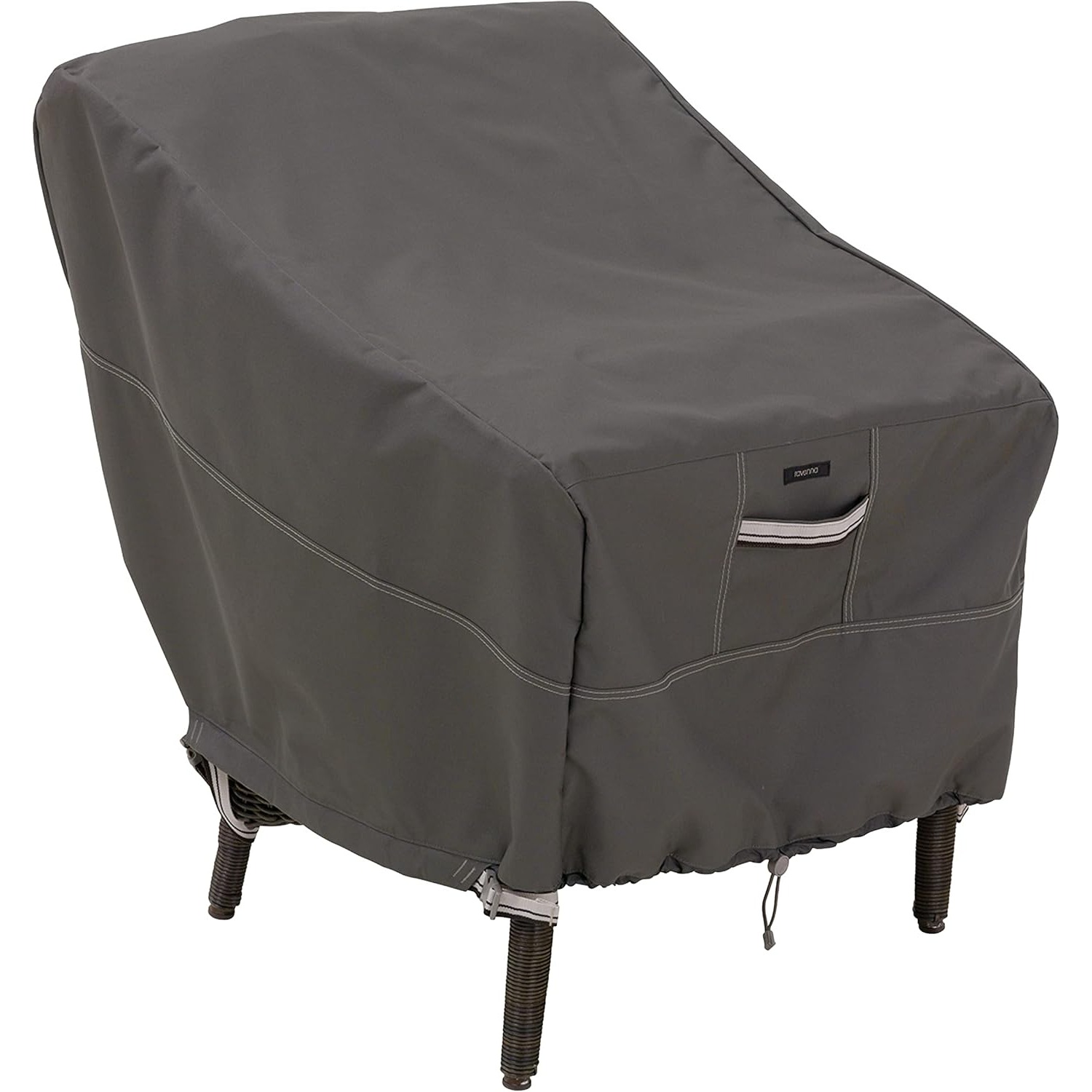
Australian winds can be brutal, particularly during storm season. The best patio chair cover with straps includes multiple fastening points to prevent the cover from blowing away or flapping in the wind. Look for features like elastic hem cords, adjustable buckles, or tie-down straps.
A quality outdoor chair cover should feature at least two different securing mechanisms — for example, an elastic hem for a snug fit around the base combined with buckle straps that attach to the chair legs. This dual-system approach ensures your cover stays in place during even the strongest gusts.
How to Measure Your Outdoor Chair
Accurate measurement is essential for finding the best garden chair cover for your furniture. Start by measuring your chair at its widest points in three dimensions:
Width: Measure from the outside of one armrest to the outside of the other. If your chair doesn't have armrests, measure the widest point of the seat or backrest.
Depth: Measure from the front edge of the seat to the back of the backrest. Include any curve or recline in the backrest — measure along the actual surface, not in a straight line.
Height: Measure from the ground to the highest point of the chair, typically the top of the backrest. If your chair has a high back or decorative finials, include these in your measurement.
Always add 2-5cm to each measurement to ensure a comfortable fit. A cover that's slightly too large is preferable to one that's too tight, as forcing a small cover onto a chair can stress the seams and fastening points.
For the best outdoor dining chair cover fit, consider measuring multiple chairs in your set, as manufacturing variations can result in slight size differences between identical chairs.
Fixed Size vs Custom Made
When choosing the best patio chair protector, you'll typically choose between standard fixed-size covers and custom-made options. Each approach has distinct advantages depending on your situation.
Fixed Size Covers offer convenience and immediate availability. If your chairs fall within standard dimensions, a quality fixed-size cover like our Patio Chair Cover provides excellent protection at a competitive price point. These covers are designed to fit the most common outdoor chair styles and sizes, with elastic hems and adjustable buckles accommodating minor size variations.
Custom Made Covers are ideal for unusually shaped furniture, oversized pieces, or those seeking a precise tailored fit. While custom covers typically cost more and require longer lead times, they eliminate any guesswork about fit and provide superior protection for unique furniture pieces.
For most Australian homeowners, a quality fixed-size cover represents the best value. The best large outdoor chair cover in a standard size will accommodate most outdoor seating, while the adjustable fastening systems ensure a secure fit despite minor size differences.
How to Care for Your Cover
Proper maintenance ensures your outdoor chair cover provides years of reliable protection. The best garden dining chair cover is an investment worth protecting with regular care.
Regular Cleaning: Remove loose debris weekly by shaking or brushing the cover. Monthly, wipe down with a damp cloth and mild soap solution. Avoid harsh detergents, bleach, or solvents that can damage waterproof coatings and UV treatments.
Deep Cleaning: Every few months, or after heavy storms, remove the cover and rinse thoroughly with a garden hose. For stubborn stains, use a soft brush with mild soap. Allow the cover to dry completely before replacing — storing a damp cover can lead to mould growth.
Seasonal Inspection: At the start and end of each season, inspect your cover for signs of wear, including cracked coatings, worn seams, or damaged fastening points. Early detection of issues allows for repair or replacement before your furniture is left unprotected.
Off-Season Storage: If you store your outdoor furniture during winter, clean your covers thoroughly before folding and storing in a cool, dry location. Avoid storing in direct sunlight or damp areas, and never store covers in plastic bags where moisture can become trapped.
Common Mistakes to Avoid
Even the best heavy duty lawn chair cover can fail prematurely if used incorrectly. Avoid these common mistakes to maximise your cover's lifespan and protective capability.
Covering Wet Furniture: Always ensure your chairs are completely dry before covering. Trapping moisture beneath the cover creates a humid environment perfect for mould and mildew growth, potentially damaging both your furniture and the cover's interior.
Ignoring Ventilation: Some homeowners seal every gap seeking maximum weather protection, inadvertently blocking air vents. The best patio arm chair cover includes ventilation features for good reason — blocking these can cause condensation buildup and related damage.
Using Incorrect Size Covers: A cover that's too small stretches the fabric and stresses the seams, leading to premature failure. A cover that's dramatically oversized can pool water on the surface and is more likely to blow away in strong winds. Take accurate measurements and choose appropriately.
Neglecting Fastening Points: Those buckles and elastic cords exist for a reason. Many homeowners simply drape covers over furniture without securing them properly. In Australian conditions, unsecured covers will blow away in the first strong wind, leaving your furniture exposed at the worst possible time.
Placing Covers Over Sharp Edges: If your chairs have any sharp points, decorative metalwork, or broken components, these can puncture or tear your cover from the inside. Inspect your furniture and address any sharp edges before covering.
Storing Covers Wet: After cleaning or heavy rain, always allow your cover to dry completely before folding for storage. Storing wet covers promotes mould growth and can cause permanent damage to waterproof coatings.
By choosing the best stackable chair cover, best patio rocking chair cover, or whichever style suits your furniture, and following these care guidelines, you'll enjoy years of reliable protection for your outdoor setting. Quality covers represent a smart investment for any Australian homeowner who values their outdoor living space.