
The Complete Guide
How to Choose the Right Kettle BBQ Cover | Kettle Barbecue Cover | Kettle Grill Cover
Why Your BBQ Needs a Cover
Australia's climate is notoriously tough on outdoor equipment, and your beloved kettle barbecue is no exception. From the scorching UV rays that can crack and fade surfaces within a single summer to the sudden afternoon storms that sweep across the eastern seaboard, your grill faces constant environmental assault. Without proper protection, even the best kettle BBQ cover becomes essential rather than optional.
The Australian UV index regularly exceeds 10 during summer months — among the highest in the world. This intense radiation doesn't just affect your skin; it degrades plastics, fades paint, and weakens metal components over time. A quality kettle barbecue protector acts as a shield, dramatically extending the life of your investment.
Beyond sun damage, moisture is your BBQ's silent enemy. Morning dew, coastal salt spray, and humidity create the perfect conditions for rust and corrosion. Even stainless steel components aren't immune when exposed to Australia's coastal air. The best waterproof kettle BBQ cover creates a barrier against these elements, keeping your grill dry and ready for action.
Then there's the dust — that fine red Australian dust that settles on everything. A quality kettle BBQ dust cover keeps your cooking surfaces clean and hygienic, meaning less prep time and more cooking time when friends and family gather for a weekend barbie.
What Makes a Quality BBQ Cover
Not all covers are created equal, and understanding what separates a premium kettle grill protector from a bargain bin disappointment can save you money and frustration in the long run.
Material Construction and Weather Resistance
The best heavy duty kettle grill cover starts with superior materials. Look for woven polyester fabric with a minimum weight that indicates durability — flimsy covers simply won't survive Australian conditions. The fabric should feature a water-resistant backing that prevents moisture penetration while remaining breathable enough to prevent condensation buildup underneath.
UV-resistant treatments are non-negotiable for Australian use. Without proper UV protection, even high-quality fabrics will degrade within months, becoming brittle and prone to tearing. The best weatherproof kettle grill cover incorporates UV stabilisers directly into the fabric, not just as a surface coating that wears off.
For coastal residents, salt resistance becomes particularly important. The best outdoor kettle grill cover uses materials that won't corrode or deteriorate when exposed to salt-laden air, protecting both the cover itself and the grill beneath.
Ventilation and Moisture Management
One often overlooked feature is proper ventilation. Without adequate airflow, covers can trap moisture against your BBQ, creating the very rust conditions you're trying to prevent. The best patio kettle grill cover incorporates strategically placed air vents that allow moisture to escape while keeping rain and debris out.
These vents serve a dual purpose during windy conditions. By allowing air to pass through rather than catching like a sail, a well-ventilated cover is less likely to blow off during those gusty spring afternoons. This design consideration is essential for the best garden kettle BBQ cover that needs to withstand variable weather.
Secure Fastening Systems
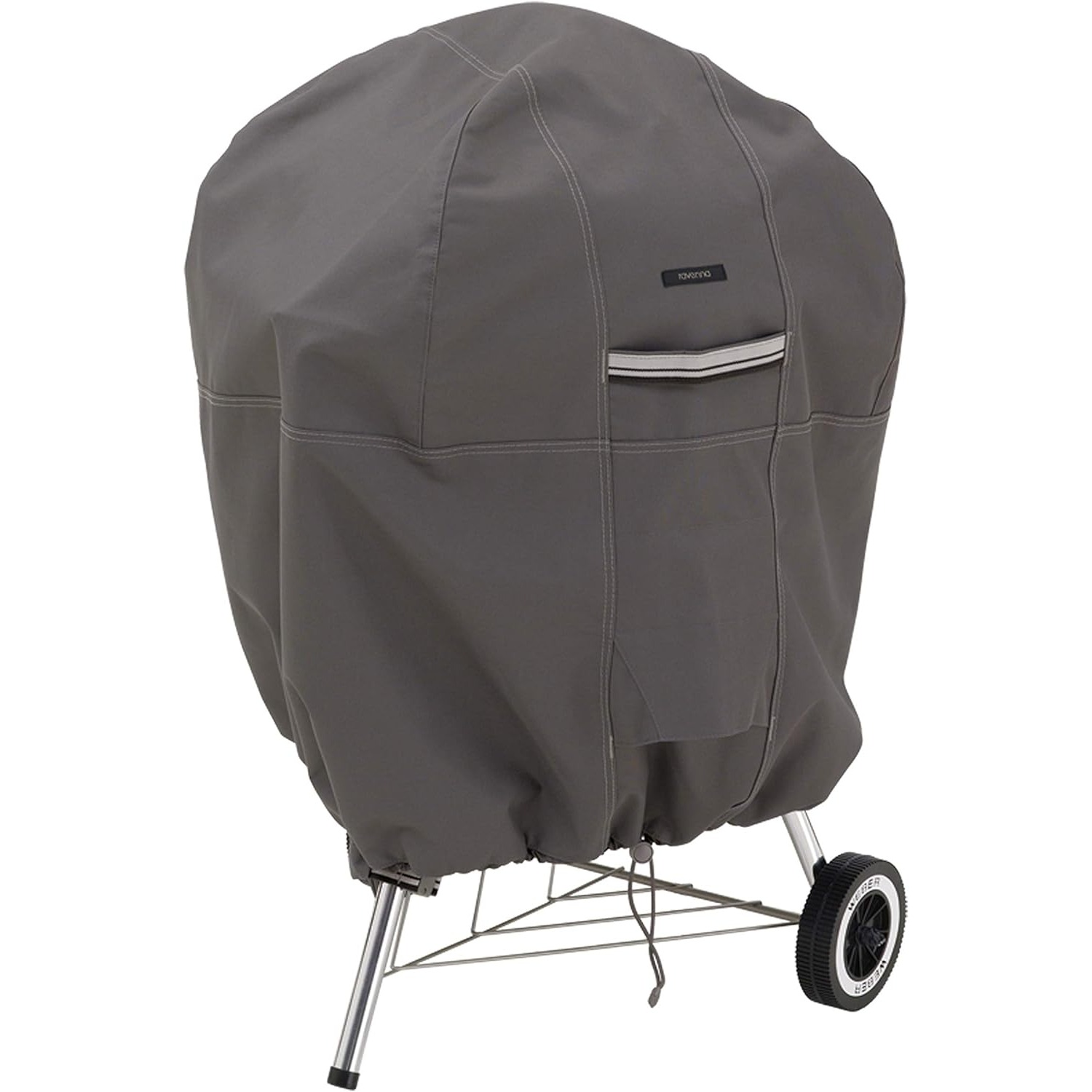
Australia is known for its winds, and a cover that blows away at the first gust is worse than useless. The best kettle BBQ cover with straps or secure fastening mechanisms stays put regardless of conditions. Look for adjustable drawstrings, toggle closures, or elastic hems that grip securely around the base of your grill.
Reinforced handles are another mark of quality. These make removing and replacing your cover effortless, encouraging regular use rather than leaving your BBQ exposed because the cover is too fiddly to deal with.
How to Measure Your BBQ
Getting the right fit is crucial for effective protection. A cover that's too small won't adequately shield your grill, while one that's too large can pool water on top or blow around in the wind.
For kettle-style barbecues, you need two key measurements. First, measure the diameter at the widest point — typically the lid. Use a tape measure across the top, from one edge to the other through the centre. For the best 22 inch kettle grill cover fit, your grill should measure close to 57cm (22 inches) or slightly less.
Second, measure the height from the ground to the highest point of your BBQ, usually the top of the lid handle. Include any attachments that will remain on during storage, such as thermometer probes or side handles.
For the best round BBQ cover fit, add 2-5cm to each measurement. This extra allowance ensures the cover slips on and off easily without being so loose that it flaps in the wind. Remember that covers may shrink slightly over time, so a bit of extra room is prudent.
If your kettle grill has extended legs or wheel assemblies, note that many covers are designed for the main body and lid, with legs remaining partially exposed. This is intentional — covering wheels completely can trap moisture and accelerate deterioration of moving parts.
Fixed Size vs Custom Made
When shopping for the best kettle barbecue cover, you'll encounter both fixed-size and custom-made options. Each has distinct advantages depending on your specific situation.
Fixed-size covers, designed to fit standard kettle grill dimensions, offer immediate availability and often more competitive pricing. If your BBQ falls within common size ranges (18-inch, 22-inch, or similar), a quality fixed-size cover will provide excellent protection. The best round charcoal grill cover in a standard size uses the same premium materials as custom options.
Custom-made covers become worthwhile when you have an unusually sized grill or specific requirements. Perhaps your kettle BBQ sits on a modified stand, or you've added accessories that alter its profile. Custom covers can also match specific colour schemes or include additional features like pockets for utensils.
For most Australian households, a well-designed fixed-size cover from a reputable supplier like CustomCover.net.au represents the best value. These covers are engineered to accommodate the most popular kettle grill models while providing professional-grade protection.
How to Care for Your Cover
Proper maintenance dramatically extends the life of your kettle grill cover, ensuring years of reliable protection for your barbecue.
Regular cleaning prevents dirt and debris from degrading the fabric. Every few weeks, or after significant weather events, wipe down your cover with a damp cloth. This simple step removes accumulated dust, pollen, bird droppings, and other materials that can stain or damage the fabric over time.
For more thorough cleaning, remove the cover and lay it flat on a clean surface. Use lukewarm water with a mild soap — dishwashing liquid works well — and a soft brush or cloth. Gently scrub any stained areas, paying attention to seams where grime can accumulate. Rinse thoroughly to remove all soap residue, as leftover detergent can affect water resistance.
Always allow your cover to dry completely before storing or replacing it on your BBQ. Storing a damp cover invites mould and mildew growth, which not only damages the fabric but can transfer to your grill. In humid climates like coastal Queensland, this step is particularly important.
Avoid using harsh chemicals, bleach, or pressure washers. These can strip protective coatings from the fabric, dramatically reducing water resistance and UV protection. Similarly, never machine wash or tumble dry your cover — the agitation and heat can damage seams and waterproof membranes.
When your BBQ won't be used for extended periods, such as during winter months, consider storing the cover separately in a dry location. This prevents prolonged contact with metal surfaces that might cause staining or material transfer.
Common Mistakes to Avoid
Even the best kettle charcoal BBQ cover can't perform properly if used incorrectly. Avoid these common mistakes to maximise protection and cover longevity.
Covering a hot BBQ tops the list of damaging errors. Always allow your kettle grill to cool completely before covering — typically at least an hour after cooking. Residual heat can melt or warp cover materials, and trapped heat accelerates fabric degradation. Some premium covers have heat-resistant properties, but none are designed for contact with actively hot surfaces.
Ignoring pooling water is another common oversight. If your cover develops areas where water collects rather than running off, address this immediately. Standing water adds significant weight that stresses seams and fabric, and eventually soaks through even water-resistant materials. Adjust the cover position or consider whether a different size might provide better runoff.
Leaving the cover off during 'good' weather shortchanges your protection investment. UV damage occurs on every sunny day, not just during heatwaves. The cumulative effect of daily sun exposure far exceeds the damage from occasional storms. Make covering your BBQ a habit regardless of the forecast.
Choosing price over quality inevitably costs more in the long run. Cheap covers that need replacing every season are neither economical nor environmentally responsible. Investing in the best kettle grill protector from a quality supplier means years of reliable protection — and ultimately fewer covers ending up in landfill.
Neglecting proper fit compromises even premium covers. A cover that's constantly being tugged, stretched, or flapping loose will wear out prematurely. Take the time to measure correctly and choose the appropriate size for your specific kettle BBQ.
By avoiding these mistakes and following proper care guidelines, your kettle BBQ cover will provide season after season of reliable protection, keeping your barbecue ready for those perfect Australian outdoor cooking moments.