
The Complete Guide
How to Choose the Right Fire Pit Cover | Fire Bowl Covers | Outdoor Firepit Cover
Why Your Fire Pit Needs a Cover
Your fire pit is often the heart of your outdoor entertaining area — the gathering place for family barbecues, winter warming sessions, and those magical evenings under the stars. But left unprotected, even the highest-quality fire pit will succumb to Australia's unforgiving climate. Finding the best fire pit cover isn't just about keeping things tidy; it's about protecting your investment and ensuring countless more memorable nights around the flames.
Australian conditions are particularly harsh on outdoor furniture and fixtures. With UV index ratings regularly exceeding 10 during summer, intense sun exposure can crack, fade, and degrade materials faster than anywhere else in the world. Add to this the sudden summer storms that sweep through with little warning, the salt-laden air in coastal areas, and the surprising cold snaps that can freeze moisture inside metal components, and you begin to understand why a quality outdoor firepit cover is essential.
Without protection, your fire pit faces several threats. Rainwater pooling in the bowl can cause rust and corrosion, particularly in steel fire pits. Fallen leaves and debris become a soggy mess that's unpleasant to clean and can stain surfaces. Bird droppings, dust, and pollen accumulate, meaning extra preparation time before each use. Perhaps most importantly, the cumulative damage from sun, rain, and temperature fluctuations dramatically shortens your fire pit's lifespan.
A best waterproof fire pit cover acts as a shield against all these elements, keeping your fire pit clean, dry, and ready for spontaneous use. There's nothing worse than planning an evening around the fire only to spend the first hour cleaning and drying your fire bowl.
What Makes a Quality Fire Pit Cover
Not all fire pit covers are created equal. Understanding what separates the best heavy duty fire pit cover from a flimsy alternative will help you make an informed decision that pays dividends for years to come.
Weather-Resistant Materials
The foundation of any best weatherproof fire pit cover is its fabric. Look for heavy-duty materials with water-resistant backing that actively repels moisture rather than simply absorbing it slowly. The best outdoor fire bowl protector will feature fabric that won't crack in cold conditions — a common failure point for cheaper covers when temperatures drop overnight.
UV resistance is non-negotiable in Australia. The best UV resistant fire pit cover will maintain its integrity and colour even after months of direct sun exposure. Inferior covers fade rapidly, becoming brittle and prone to tearing within a single summer season. Quality covers use UV-stabilised materials or protective coatings that significantly extend their useful life.
Breathability matters too. Integrated air vents serve a dual purpose: they allow moisture to escape, preventing the condensation and mould growth that can occur under non-breathable covers, and they reduce wind lofting — that frustrating tendency for covers to balloon and fly away in breezy conditions.
Secure Fit Features
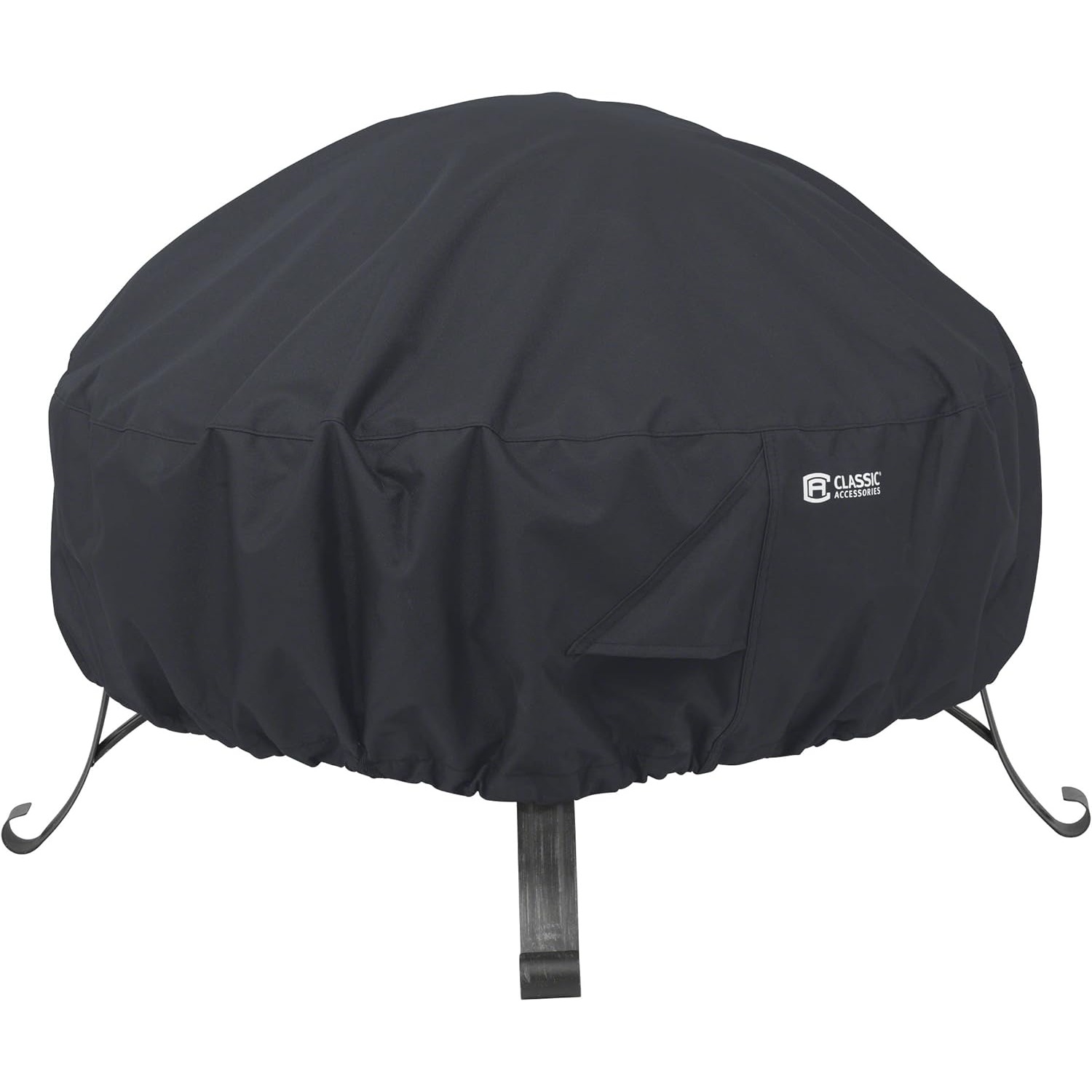
The best fire pit cover with straps or elastic retention systems will stay put regardless of weather conditions. An elasticised hem provides a snug, custom-like fit that hugs the contours of your fire pit, while additional features like StayOn elastic loops that hook over legs offer extra security during high winds.
Consider how you'll be using the cover daily. Toggle closures, drawstrings, and elastic systems each have their merits. The key is ensuring the cover can be fitted and removed easily — because if it's a hassle, you simply won't use it consistently.
Appropriate Sizing
Whether you need a best round fire pit cover or a best square fire pit cover, proper sizing is crucial. A cover that's too small won't provide adequate protection, leaving edges exposed to the elements. Conversely, an oversized cover looks untidy, collects water in folds, and is more likely to blow away.
The best large fire pit cover for substantial fire bowls will be specifically dimensioned for bigger units, while standard covers suit typical backyard fire pits. Always measure carefully before purchasing.
How to Measure Your Fire Pit
Accurate measurements ensure your new cover fits perfectly, providing maximum protection and a neat appearance. Here's how to measure your fire pit correctly:
For round fire pits: Measure the diameter at the widest point, including any handles, decorative elements, or protruding features. Then measure the height from the base to the highest point of the rim. If your fire pit has a lid or spark screen that stays on, include this in your height measurement.
For square or rectangular fire pits: Measure the length and width at the widest points, again including any handles or protrusions. Measure the height as above.
Account for clearance: It's better to have a cover slightly larger than one that's too tight. A cover that's 2-5cm larger than your fire pit dimensions will still fit snugly thanks to elasticised hems while being easier to fit and remove.
Write down your measurements and compare them carefully to the cover specifications before ordering. Remember that product dimensions are typically listed as Diameter x Height for round covers, or Length x Width x Height for rectangular options.
Fixed Size vs Custom Made
When shopping for the best patio fire pit cover, you'll encounter both standard fixed-size options and custom-made alternatives. Each approach has distinct advantages depending on your situation.
Fixed size covers offer immediate availability, competitive pricing, and proven designs that have been tested across thousands of fire pits. If your fire pit matches standard dimensions — and many do, as manufacturers tend to work with common sizes — a quality fixed-size cover provides excellent value. The best garden fire pit cover in a standard size will feature the same premium materials and construction as custom options.
Custom-made covers become worthwhile for unusually shaped fire pits, built-in installations, or situations where a perfect fit is paramount. Custom covers can accommodate unique features, unusual dimensions, and specific aesthetic requirements. However, they typically cost more and require longer lead times.
For most Australian backyards, a well-chosen fixed-size cover that matches your fire pit's dimensions will provide outstanding protection. The key is accurate measurement and selecting a cover designed for your shape — whether that's a best round fire pit cover or a best square fire pit cover.
How to Care for Your Cover
Proper maintenance extends the life of your fire pit cover significantly, ensuring it continues protecting your investment for years to come. Here's how to care for your best fire pit dust cover:
Regular cleaning: Wipe down your cover monthly with a damp cloth to remove dust, pollen, and light soiling. For more thorough cleaning, use a mild soap solution and soft brush, then rinse thoroughly and allow to air dry completely before replacing.
Avoid harsh treatments: Never use bleach, harsh chemicals, or pressure washers on your cover. These can damage the water-resistant coating and degrade the fabric fibres, compromising protection.
Check before covering: Always ensure your fire pit is completely cool before fitting the cover. Residual heat can damage the cover material and potentially create a fire hazard. Brush out ash and debris from the fire bowl to prevent moisture from mixing with ash and creating corrosive compounds.
Proper storage: If storing your cover during extended periods of non-use, ensure it's clean and completely dry. Store in a cool, dry location away from direct sunlight. Folding loosely rather than cramming into tight spaces helps prevent permanent creasing.
Seasonal inspection: At the start of each season, inspect your cover for signs of wear, particularly along seams and stress points. Address minor issues early before they become major problems.
Common Mistakes to Avoid
Even with the best all weather fire pit cover, certain mistakes can compromise protection or shorten the cover's lifespan. Avoid these common pitfalls:
Covering while still hot: This is the most common and potentially dangerous mistake. Hot embers can melt or ignite cover material. Always wait until your fire pit is completely cool to the touch — this typically takes several hours after the fire has died down.
Ignoring proper fit: Using a cover that's significantly too large or small defeats the purpose. An oversized cover collects water in folds and can blow away, while an undersized cover leaves portions exposed. Invest time in measuring correctly.
Neglecting regular removal: Even the best fire bowl dust cover needs to come off periodically. Leaving a cover on for months without removal can trap moisture and promote mould growth. Remove the cover during dry spells to allow everything to air out.
Forgetting to secure: Even covers with elasticised hems can blow away in strong winds if additional security features aren't used. Always engage StayOn loops, toggle closures, or other retention systems, particularly during storm season.
Storing dirty or wet: Putting away a dirty or damp cover invites mould, mildew, and premature degradation. Always clean and dry your cover before extended storage.
Choosing price over quality: A cheap cover that fails after one season is no bargain. The best outdoor fire pit protector represents a modest investment that pays for itself many times over by extending your fire pit's lifespan and eliminating pre-use cleaning sessions.
By selecting a quality cover, measuring accurately, and following proper care practices, your fire pit will remain in pristine condition through countless Australian seasons. The small effort of covering and uncovering your fire pit rewards you with years of reliable service and countless memorable evenings around the flames with family and friends.